Das DTA ist ein Archiv für deutschsprachige, historische Textsammlungen an der Berlin-Brandenburgischen Akademie der Wissenschaften. Es umfasst annotierte Volltexttranskriptionen von
Short description of the project
ELAN is being developed at the Max Planck Institute for Psycholinguistics in The Language Archive (TLA). It is written in the programming language Java; the sources are available for both non-commercial and commercial purposes. With ELAN, a user can create an unlimited number of annotations to primary audio and video data. An annotation can be, for example, a sentence, word or morpheme, gloss, a comment, a translation, a gesture type, or a tag or description of any other type of feature observed in the media.
Project content
ELAN offers a layered or tier-based annotation system. These tiers can be hierarchically connected. On independent tiers, annotations are arranged synchronously or time-aligned to the media – the user determines or changes the start and end point of each annotation. On dependent tiers, further down in the hierarchy, annotations refer to other existing annotations, whereby they can either use the same start and end times (one-to-one relationship), or further subdivide the interval of an annotation on an tier higher up in the hierarchy (1:n relationship). For example, a tier can contain annotations with sentence-related transcriptions while one-to-one dependent tiers may contain translations of those sentences into other languages. Or a dependent 1:n tier contains an annotation for each word or morpheme of the tier at the higher level, while another includes a gloss for each word or morpheme. Numerous 1:n relationships are possible, e.g. depending on whether internal start and end times can be determined on the dependent tier. This flexibility within the tier relations allows to model the complex ontological relations of features that are annotated on different tiers. The hierarchical configurations can be specified for multiple speakers and can serve as a template for new annotation documents. Annotations can be queried by either a single or a multi-tier search, with or without regular expressions, within a single document or within a selection of annotation documents. The annotations are always created and stored in separate files, independent of the associated multimedia files (stand-off); the latter remain unchanged. The textual content of annotations is always in Unicode and the annotation files are stored in a special XML format, “EAF” (ELAN Annotation Format). When archived in The Language Archive, ELAN data can be displayed online in a web browser together with the associated media files.
Add your DH research project to the project showcase by submitting a short project description via the web form. Enter project data, a brief description, a graphic or visualization as well as a detailed description of the project content with technical assignment, addressees, added value, project managers, funding information and duration.

Das DTA ist ein Archiv für deutschsprachige, historische Textsammlungen an der Berlin-Brandenburgischen Akademie der Wissenschaften. Es umfasst annotierte Volltexttranskriptionen von

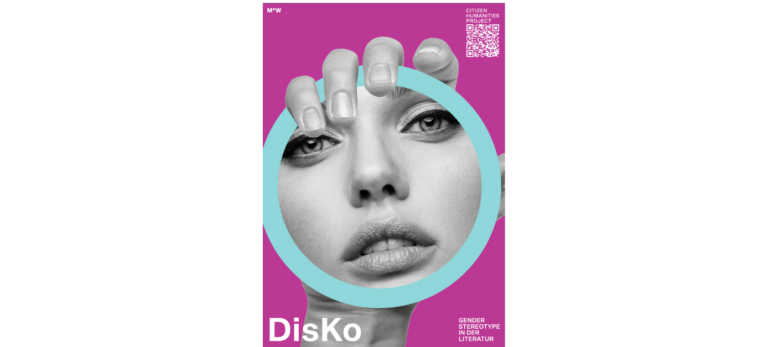
DisKo steht für Diversitäts-Korpus und ist ein literaturwissenschaftliches Projekt mit Digital-Humanities-Komponente. Mit Methoden des maschinellen Lernens wollen wir einen Algorithmus
HGIS de las Indias ist eine historisch-geographische Datenbank zum Spanisch-Amerika der ausgehenden Kolonialzeit.

Das Hamburger Zentrum für Sprachkorpora berät und unterstützt bei der Erstellung und Nutzung digitaler Sprachkorpora in Forschung und Lehre: Es

Die Edition „Hamburger Schlüsseldokumente zur deutsch-jüdischen Geschichte“ soll sowohl einem akademischen Publikum als auch der interessierten Öffentlichkeit einen niedrigschwelligen Zugang

Das Institut für Dokumentologie und Editorik e.V. (IDE) ist ein internationaler Zusammenschluss von Wissenschaftlerinnen und Wissenschaftlern aus verschiedenen Disziplinen der

Annotate, analyze, interpret and visualize: In CATMA, text researchers can work in the way that best suits them: qualitatively or quantitatively, bottom-up and exploratory or descriptive and taxonomy-based, individually or in a team. The web-based open source tool is free of charge and also offers the possibility of exporting your own data, for example to process it further with other tools.

Annotate, analyze, interpret and visualize: In CATMA, text researchers can work in the way that best suits them: qualitatively or quantitatively, bottom-up and exploratory or descriptive and taxonomy-based, individually or in a team. The web-based open source tool is free of charge and also offers the possibility of exporting your own data, for example to process it further with other tools.
Wir verwenden Cookies und ähnliche Funktionen zur Verarbeitung von Daten. Die Zustimmung ist freiwillig und kann jederzeit widerrufen werden.