Arthur Schnitzler gehört zu den bedeutendsten österreichischen Autoren und war ein produktiver und gut vernetzter Briefschreiber. Seine Korrespondenz wurde jedoch
Short description of the project
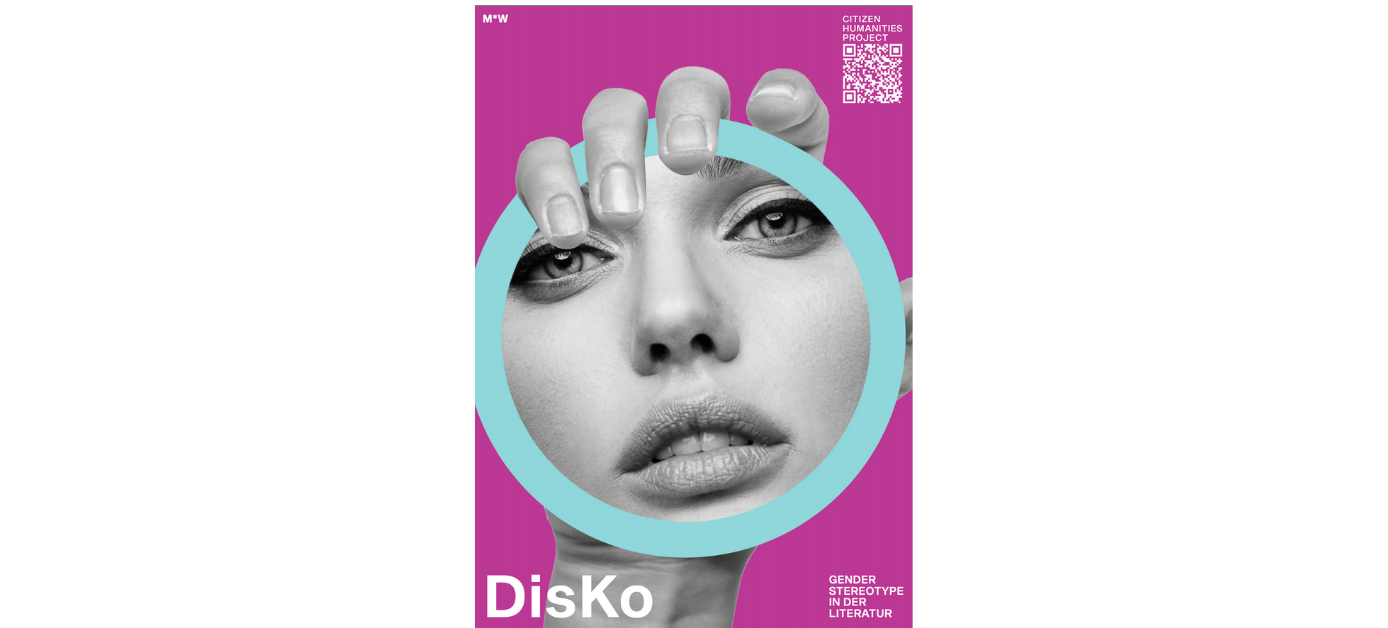
We are building a diversity corpus (DisKo) as the basis for the algorithmic text analysis. DisKo comprises narrative texts written in the last 100 years in which not only male, female and neutral roles occur, but also descriptions of non-binary characters. The corpus serves as training material for a classifier for the automated analysis of gender roles in German-language literary texts.
Project content
DisKo stands for Diversity Corpus (German: Diversitätskorpus) and is a project in the field of Computational Literary Studies. We use machine learning to train an algorithm that not only recognises female, male and neutral roles in literary texts, but also less binary gender attributions. For this training process, we first need a training corpus that is as diverse as possible and consists of texts in which non-binary gender attributions occur. As part of a public humanities concept, as many different groups of readers as possible are involved in the acquisition of the corpus. The more diverse the people involved in the creation of the corpus, the more diverse the texts in our training corpus will ultimately be. This diversity is important in order to make gender diversity visible with our digital humanities approach. The central component of the project is a survey in which you can submit your text references. Do you know of literary works in which characters are not described stereotypically, but in a diverse way? Then take part in our survey via the link, enter text suggestions and help us to build up a diversity corpus: https://public.zenkit.com/f/klZHAjPGg/disko?v=xQoeCRIop
Add your DH research project to the project showcase by submitting a short project description via the web form. Enter project data, a brief description, a graphic or visualization as well as a detailed description of the project content with technical assignment, addressees, added value, project managers, funding information and duration.

Arthur Schnitzler gehört zu den bedeutendsten österreichischen Autoren und war ein produktiver und gut vernetzter Briefschreiber. Seine Korrespondenz wurde jedoch

Das Hidden Kosmos – Reconstructing Alexander von Humboldt’s »Kosmos-Lectures« widmete sich von 2014–16 der Ermittlung und Verzeichnung, Bild- und Volltext-Digitalisierung

EXMARaLDA wurde ursprünglich (2000-2011) am SFB Mehrsprachigkeit der Universität Hamburg entwickelt. Die Entwicklung von FOLKER und OrthoNormal wurde über das

Das Hidden Kosmos – Reconstructing Alexander von Humboldt’s »Kosmos-Lectures« widmete sich von 2014–16 der Ermittlung und Verzeichnung, Bild- und Volltext-Digitalisierung

Das Institut für Dokumentologie und Editorik e.V. (IDE) ist ein internationaler Zusammenschluss von Wissenschaftlerinnen und Wissenschaftlern aus verschiedenen Disziplinen der
Der Arbeitskreis organsiert das #ArthistoCamp, die Schriftenreihe Computing in Art and Architecture und den #arthistocast – der Podcast zur Digitalen

The digital working environment ediarum is a solution consisting of several software components that allows scholars to edit transcriptions of manuscripts and prints in TEI-compliant XML, add commentaries and a critical apparatus as well as indexes and publish them on the web and in print.

Im Zentrum steht die Erforschung digitaler, datenintensiver Medien, die sich auf breiter Front als kooperative Werkzeuge, Plattformen und Infrastrukturen herausgestellt haben und im Kontext ubiquitärer Verdatung durch Sensortechnologien und semi-autonom operierender künstlicher Intelligenz auf neue Weise virulent werden. In diesem Spannungsfeld leistet der SFB digitale Grundlagenforschung, die zwischen Geschichte und Gegenwart vermittelt und zukünftige digitale Medien gestaltet.
Wir verwenden Cookies und ähnliche Funktionen zur Verarbeitung von Daten. Die Zustimmung ist freiwillig und kann jederzeit widerrufen werden.