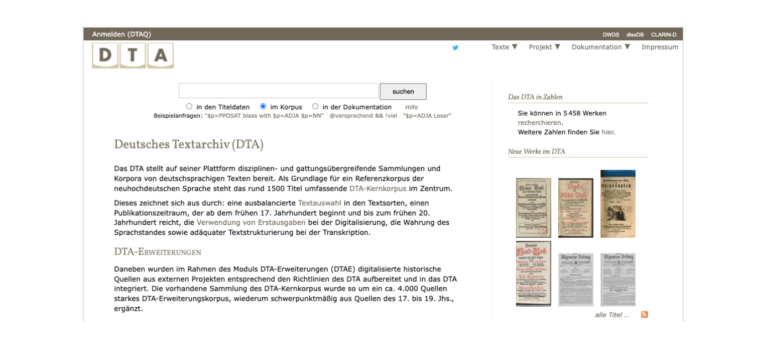
Deutsches Textarchiv (DTA)
Weiterlesen →
Das DTA ist ein Archiv für deutschsprachige, historische Textsammlungen an der Berlin-Brandenburgischen Akademie der Wissenschaften. Es umfasst annotierte Volltexttranskriptionen von

Das DTA ist ein Archiv für deutschsprachige, historische Textsammlungen an der Berlin-Brandenburgischen Akademie der Wissenschaften. Es umfasst annotierte Volltexttranskriptionen von
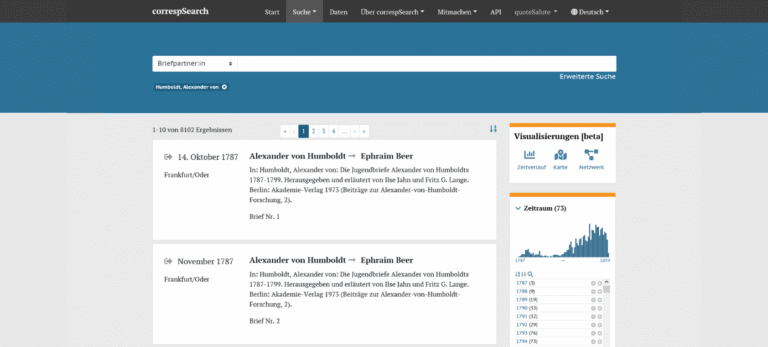
Der Webservice correspSearch wurde entwickelt um ein lange bestehendes Desiderat von Briefeditionen zu beheben: Die edierten Briefe editionsübergreifend durchsuchen zu
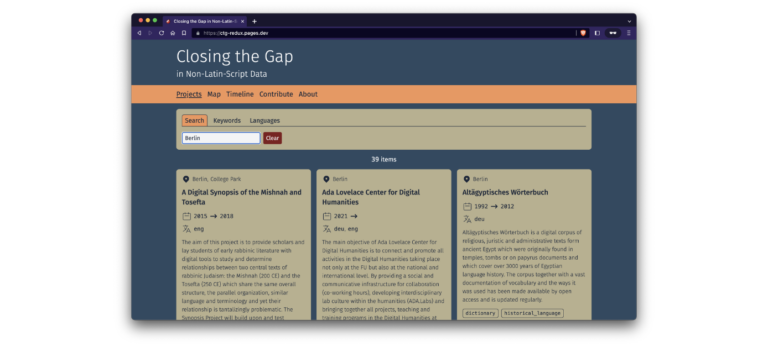
Das Fach ist BUA-finanziert und am Seminar für Semitistik und Arabistik angelegt. Es fokussiert sich auf die Analyse des status
Die Virtuelle Forschungsumgebung TextGrid ist optimiert für die digitale Erschließung geisteswissenschaftlicher Quellen und deren langfristige Archivierung in einem Web-Archiv, insbesondere
Das DARIAH-DE Repository ist eine zentrale Komponente der DARIAH-DE Forschungsdaten-Föderationsarchitektur, die verschiedene Dienste und Anwendungen aggregiert und so komfortabel nutzbar

Der Arbeitskreis organsiert das #ArthistoCamp, die Schriftenreihe Computing in Art and Architecture und den #arthistocast – der Podcast zur Digitalen
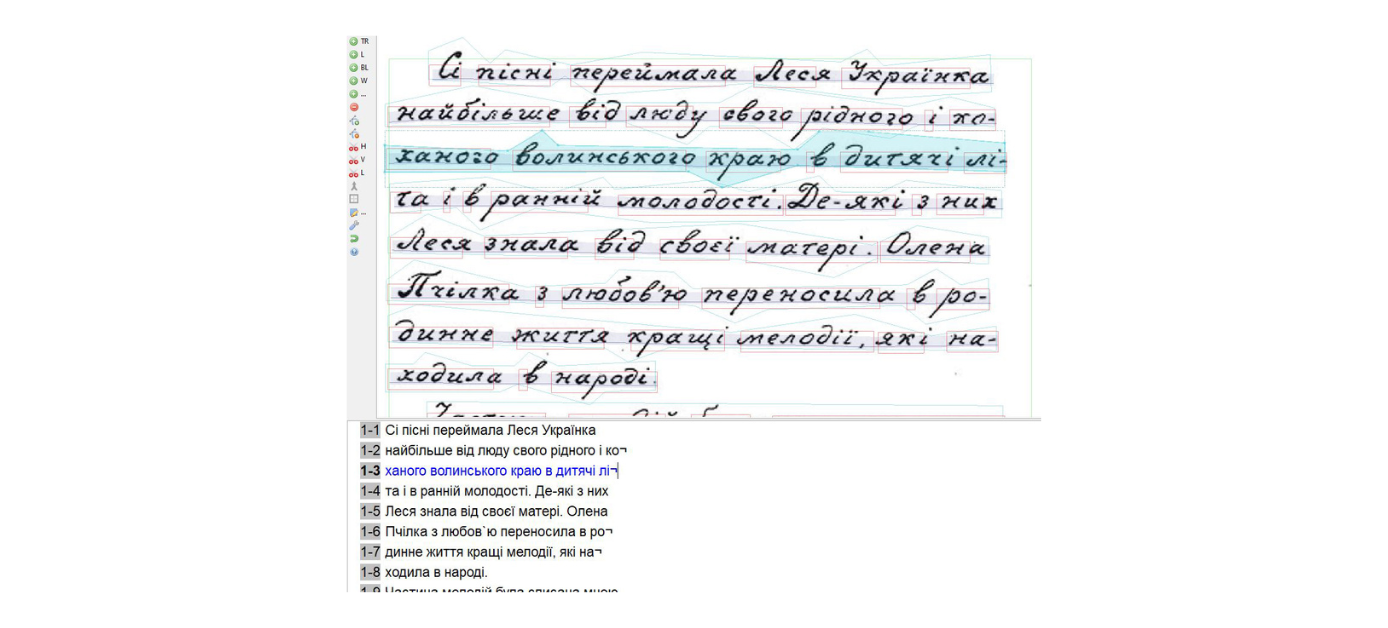
Das MultiHTR-Team setzt die Ergebnisse der ersten erfolgreichen Projektphase (01. Juni 2020 bis 31. Mai 2022) fort, um in der
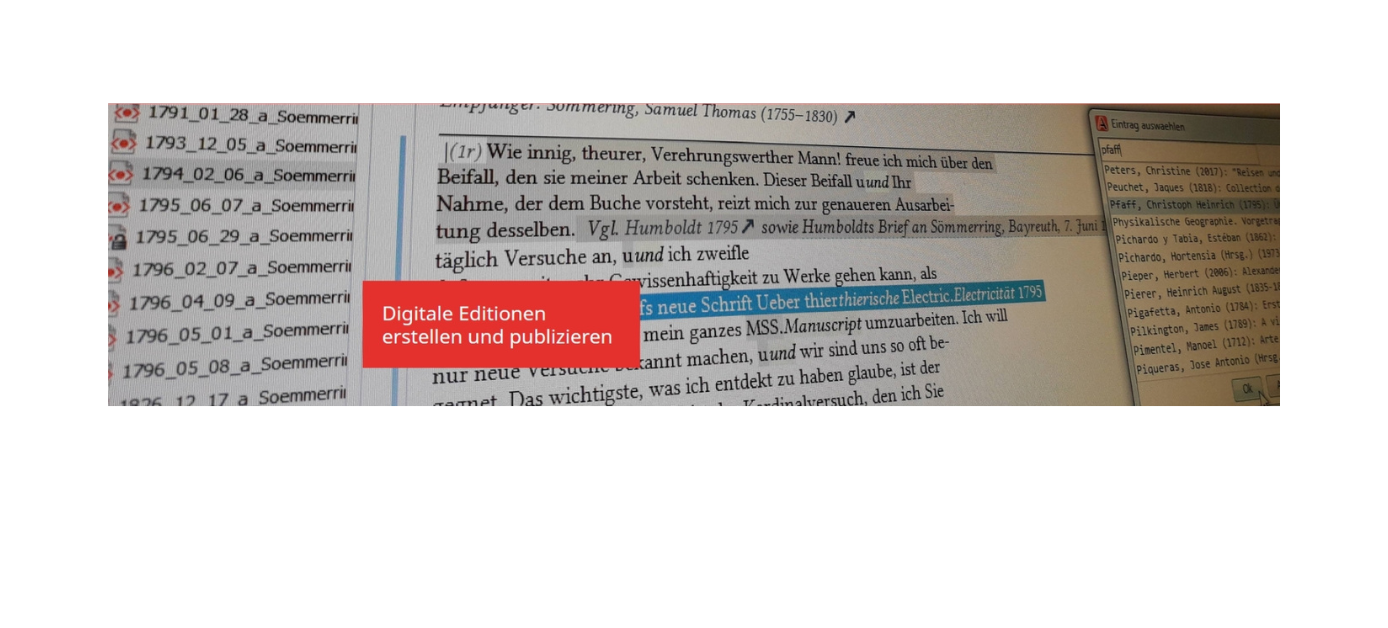
The digital working environment ediarum is a solution consisting of several software components that allows scholars to edit transcriptions of manuscripts and prints in TEI-compliant XML, add commentaries and a critical apparatus as well as indexes and publish them on the web and in print.