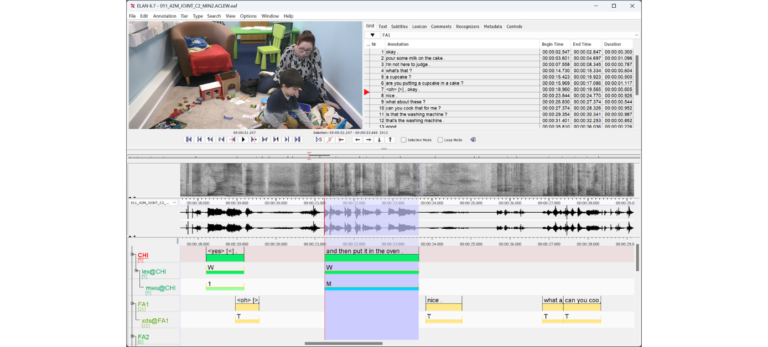
ELAN
Weiterlesen →
ELAN wird am Max-Planck-Institut für Psycholinguistik im Sprach-Archiv (TLA – The Language Archive) entwickelt. Es wird in der Programmiersprache Java

ELAN wird am Max-Planck-Institut für Psycholinguistik im Sprach-Archiv (TLA – The Language Archive) entwickelt. Es wird in der Programmiersprache Java
Das forTEXT Portal bietet einsteigerfreundlich aufbereitete, zitierfähige Methodenbeschreibungen und Reviews von Textsammlungen und Tools – von Digitalisierung über Annotation zu
Der Vergleich als methodisches und epistemologisches Paradigma ist in den Geisteswissenschaften tief verankert. Ob in der qualitativen oder quantitativen Forschung
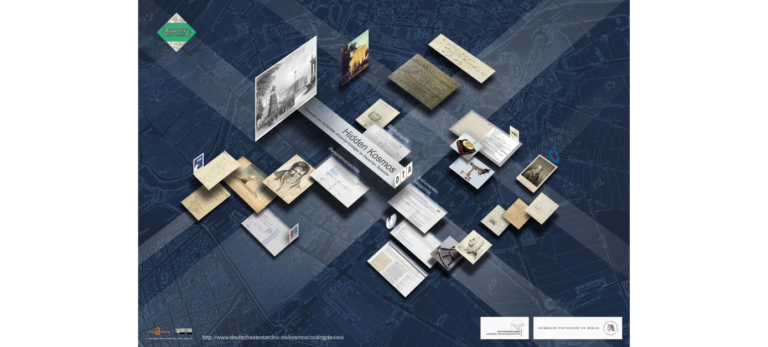
Das Hidden Kosmos – Reconstructing Alexander von Humboldt’s »Kosmos-Lectures« widmete sich von 2014–16 der Ermittlung und Verzeichnung, Bild- und Volltext-Digitalisierung
CLARIAH-DE ist ein Beitrag zur digitalen Forschungsinfrastruktur für die Geisteswissenschaften und benachbarte Disziplinen. Durch die Zusammenführung der Verbünde CLARIN-D und
Im Zentrum steht die Erforschung digitaler, datenintensiver Medien, die sich auf breiter Front als kooperative Werkzeuge, Plattformen und Infrastrukturen herausgestellt
The Bibliotheca legum aims at providing an overview of the textual production of secular law texts in the Frankish empire. Descriptions (according to TEI P5) of all manuscripts containing secular legal texts (leges) as well as other contextualising material are presented.
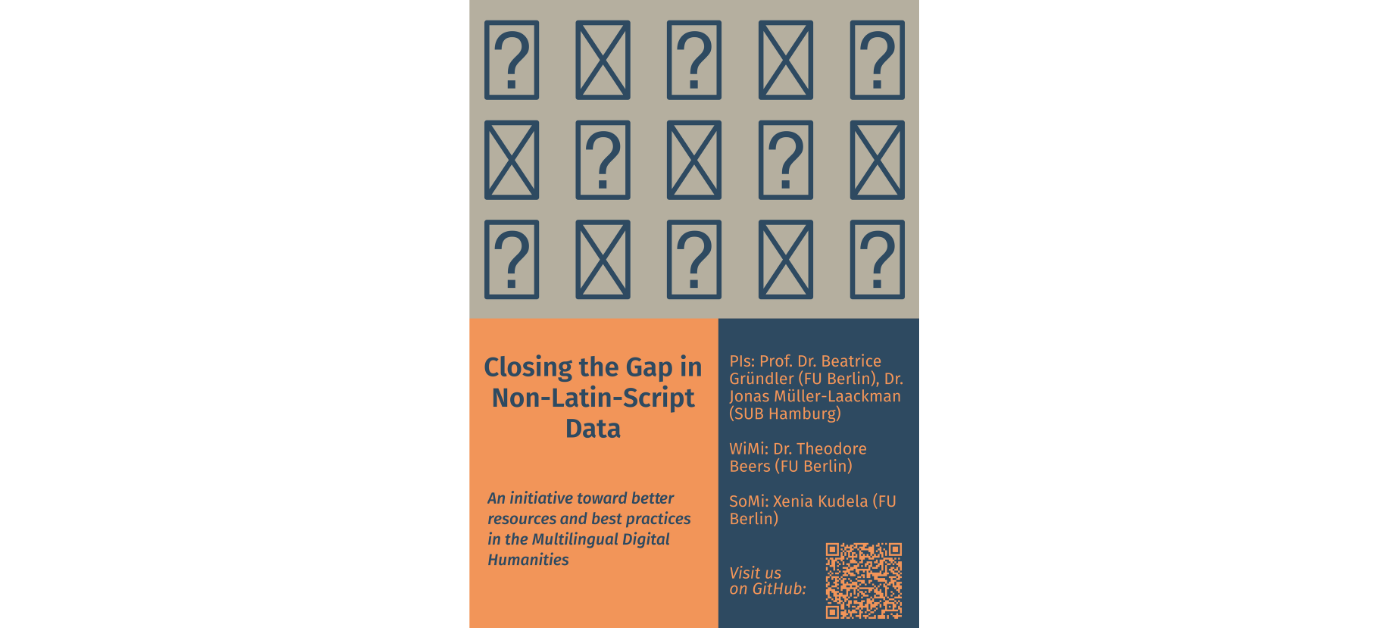
Das Projekt aggregiert Informationen zu digitalen Projekten und Konsortien, die sich im weitesten Sinne mit nicht-lateinischen Schriften beschäftigen. Die gesammelten Daten werden visualisiert und sollen Aussagen darüber treffen, was nötig ist, damit sich die Bedingungen für die Arbeit mit NLS im Bereich Digital Humanities bessern. Zusätzlich dient das Projekt als Knowledgebase für Forscher:innen, die sich einen Eindruck über den state of the field machen wollen. Das Projekt stellt alle Forschungsdaten, den Code und die Workflows im Open Access über GitHub zur Verfügung.